Czech Senate Rejecting China's Interference in Selection of 15th Dalai Lama
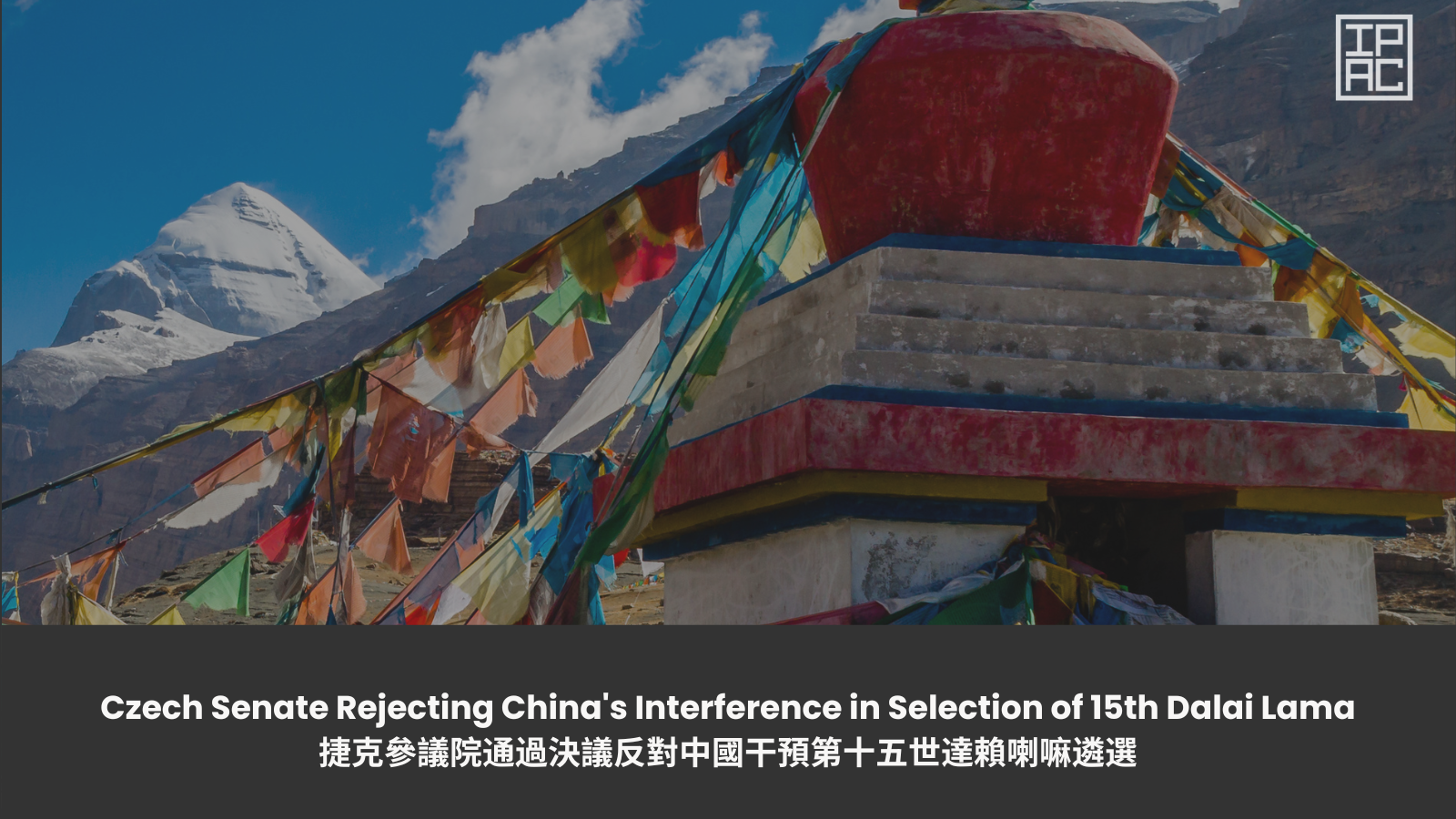
Today, the Czech Senate unanimously adopted a resolution, rejecting China's interference in selection of the 15th Dalai Lama. The resolution was supported by IPAC Co-Chair Senator Pavel Fischer (Independent). The Senate affirmed the Tibetan people's religious freedom to choose their spiritual leader without interference and declared the PRC has no legitimate authority to select the next Dalai Lama.
The initiative marks Czechia as the second country within the Inter-Parliamentary Alliance on China (IPAC) network to introduce a parliamentary motion on Tibet following the Alliance’s unanimous agreement at the IPAC Brussels Summit 2025 to pursue coordinated parliamentary action on Tibet.
The motion reads as follows:
That the Senate —
(I)
- Recalls the long-standing warm relations between the people of the Czech Republic and the people of Tibet, as well as the private meeting of the President of the Republic on 27 July 2025 in Leh, Ladakh, and the meeting of the Czech parliamentary delegation in Dharamsala on 10 December 2025 with the Nobel Peace Prize laureate, the 14th Dalai Lama
- Recalls that the text of the Constitution of the People's Republic of China (PRC) guarantees the rights of national minorities, including the right to use their own language and develop their own culture, which also applies to the inhabitants of the Tibet Autonomous Region;
- Considers Buddhism and the spiritual traditions of Tibet to be a supreme expression of culture, and this spiritual culture must be protected and developed, inter alia, in the spirit of the commitments voluntarily undertaken by the PRC as a member state of UNESCO, namely, for example, by acceding to the Universal Declaration on Cultural Diversity (2001) or by ratifying the Convention on the Protection and Promotion of the Diversity of Cultural Expressions of 2005, which establishes the principle of equal dignity and respect for all cultures (Article 2(3) of the Convention), the obligation to create conditions for the cultural expressions of indigenous peoples (Article 7(1)(a))) or imposes certain restrictions on signatory states in the development of cultural policy (Article 2(2)), since the sovereignty of the state should not limit or erase cultural diversity, but on the contrary, protect and promote it;
- Received with concern the information that the People's Republic of China approved the new Law on Promoting Ethnic Unity and Progress of 12 March 2026, which openly advocates assimilation, restricts culture, religious freedom or education in minority languages, which was also criticized by the UN High Commissioner for Human Rights;
- Notes concern at reports of long-standing efforts by the People's Republic of China to influence the election of the incoming 15th Dalai Lama and shares the concerns of the Central Tibetan Administration, the Tibetan diaspora and the Tibetan Buddhist community about the People's Republic of China's interference in the free election of the Tibetan people for the incoming 15th Dalai Lama;
- Respects the religious freedoms of the Tibetan people in their unique Buddhist tradition, including the freedom to choose their religious leaders without interference from the People's Republic of China;
- Supports a free discussion between the Central Tibetan Administration and the Tibetan people on the election of the next spiritual leader of the 15th Dalai Lama, without pressure and interference from the People's Republic of China;
- Declares that the People's Republic of China does not have the legitimate authority to select the successor of the 14th Dalai Lama and that the election of the 15th Dalai Lama is the exclusive responsibility of the Tibetan people;
(II)
- Recommends that the Czech government support the free election of the 15th Dalai Lama with a view to respecting the religious freedom of the Tibetan people;
- Instructs the President of the Senate to inform the Prime Minister of the Czech Republic and the Minister of Foreign Affairs of the Czech Republic of this resolution.

.png)
%20(1).jpg)